


Audits and controls are therefore crucial for preventing deliberate or accidental misstatements. Recognizing receivables and payables provides a realistic depiction of liquidity and obligations, improving transparency in both asset management and liability tracking. When applied correctly, it enhances investor confidence and supports longitudinal financial analysis.

Talk to a Sage Expense Management Specialist
- In the GAAP hierarchy, the rules for expense recognition are outlined to ensure consistency and accuracy in financial reporting.
- This ensures that financial statements accurately reflect the true cost of generating revenue.
- This principle is designed to reduce the risk of overstating income and assets.
- Marilyn brings up another less obvious asset—the unexpired portion of prepaid expenses.
- Recognizing expenses in the GAAP hierarchy is critical to ensuring that financial statements accurately reflect the financial health of a company.
Whether you’re an accountant, business owner, or finance student, understanding and applying the expense recognition principle is essential to measuring true profitability. This approach ensures the matching of costs to revenues and provides a clearer picture of financial performance. Relating to the accrual principle, the revenue recognition principle says that a company should record revenue when a sale has been made or service is done, not when the sale and service are paid for. The matching principle states that any expenses and the revenues they create should be recognized in the same period.

Why Businesses Choose Accrual Accounting
A separate line within stockholders’ equity that reports the corporation’s cumulative income that has not been reported as part of net income on the corporation’s income statement. The items that would be included in this line involve the income or loss involving foreign currency transactions, hedges, and pension liabilities. For instance, a business recognizing advertising expenses in the period they contribute to sales, rather than when the cash payment occurs, is applying the matching principle. For example, if a company pays for a two-year software license, the expense would be deferred and recognized gradually over the two years.
Why is the expense recognition principle used?
Only those transactions that can easily be verified with evidence should be recorded in accounts. The materiality principle states that other accounting principles do not necessarily have to be followed if the net impact of ignoring them is negligible. Materiality refers to the size of an amount and how it relates to the size of the company. Only the expenses relating directly to the company should be in the company’s financial records. Learn more about accounting principles and how they apply to your small business. It aligns with the ethical and regulatory requirement that income can only be recognized once it is actually earned through service delivery or product provision.

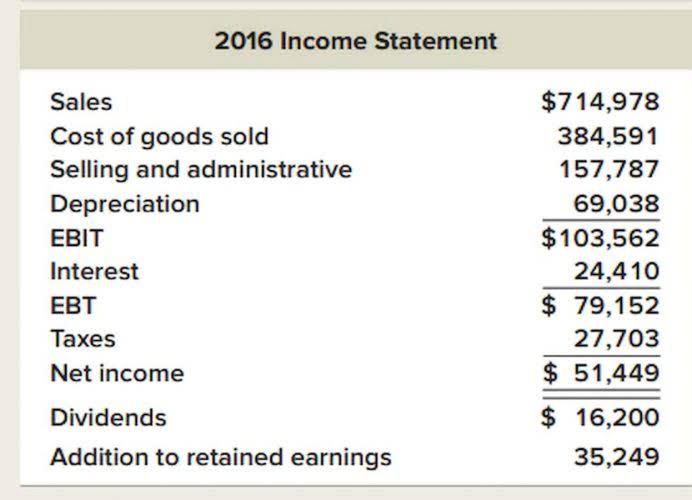
This approach prevents artificial inflation of early period profits and correctly matches the inventory cost with its corresponding revenue, giving stakeholders an accurate view of the profit margin on each sale. A current asset account that reports the amount of future rent expense that was paid in advance of the rental period. The amount reported on the balance sheet is the amount that has not yet been used or expired as of the balance sheet date.
- This streamlining helps businesses manage large projects without compromising on accuracy or compliance.
- Joe wants to understand the financial statements and wants to keep on top of his new business.
- The accounting principles used in preparing footnotes ensure that the information presented is relevant and reliable.
- With accrual data, management can anticipate future obligations, recognize trends in revenue generation, and set realistic budgets that align with operational goals.
- So, no matter which accounting approach a business follows, it should be kept consistent so that financial statements are comparable between different accounting periods.
- Adjusting entries are required at the end of each accounting period to ensure financial statements reflect accurate revenue and expense recognition.
A. Aligning Expenses with Revenue
Understand the Expense Recognition Principle and align expenses with revenue to ensure accurate financial reports and smart decision-making. These principles provide a framework for recording, analyzing, and the basic principle involved with expense recognition is interpreting financial transactions. Accounting principles help companies to comply with legal and regulatory requirements. For example, the Generally Accepted Accounting Principles (GAAP) are a set of accounting principles that are widely used in the United States. Companies that follow GAAP are more likely to comply with legal and regulatory requirements.
Expense Recognition Principle
The account title for the money that Direct Delivery has a right to receive for having provided the service is Accounts Receivable (an asset account). Marilyn also informs Joe that the income statement amounts might be different from the income tax accounting return amounts since the tax rules can be different from the accounting profession’s rules. For now, Joe should focus on the accounting rules and work to make his business profitable. For example, if a business purchases a patent for $100,000 with a useful life of 10 years, it would amortize $10,000 each year, reflecting the asset’s usage over time. This process mirrors depreciation but is specifically used for intangible assets.
Understanding Accounting Principles
Long-term assets (such as buildings, equipment, and furnishings) are reported at their cost minus the amounts already sent to the income statement as Depreciation Expense. Although accountants do not increase the value of most assets, they might decrease an asset’s value as a result of a concept known as conservatism. For example, after a few months in business, Joe may decide that he can earn additional revenues by carrying an inventory of packing boxes to sell. Since the time when Joe bought them, however, the price of boxes has been cut by 40% and at today’s price Bookkeeping for Chiropractors he could purchase them for $6 each.